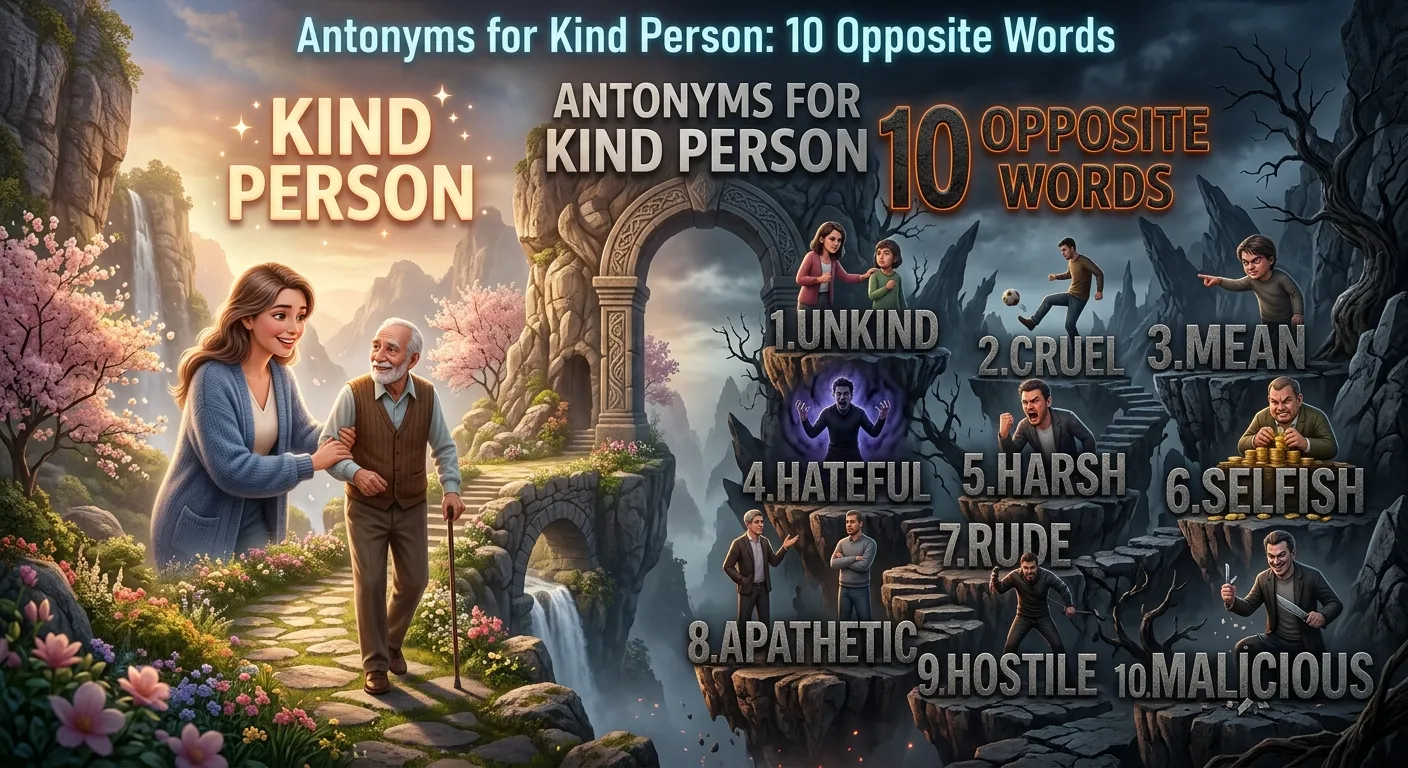
Featured Snippet
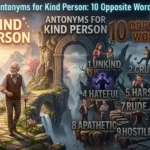
The most direct antonym for a kind person is an unkind person someone who is not caring, helpful, or considerate toward others. Depending on the behavior, stronger or more specific opposites include cruel, mean, selfish, callous, inconsiderate, and heartless.
Quick Answer
A kind person treats others with care, generosity, and consideration. The most direct opposite is an unkind person.
However, not every unkind person is cruel. The best antonym depends on the behavior:
- Unkind :not kind or considerate
- Mean: deliberately unpleasant or hurtful
- Cruel: causing pain or suffering deliberately
- Selfish: caring mainly about one’s own interests
- Callous: showing little concern for other people’s feelings
- Inconsiderate: failing to think about other people’s needs or feelings
- Heartless: lacking sympathy or compassion
- Rude: lacking politeness or respect
Quick Comparison Table
| Word | Meaning | Example |
| Kind person | Caring, helpful, and considerate | Sara is kind to everyone at school. |
| Unkind person | Not caring or considerate | He was unkind to his new colleague. |
| Mean person | Deliberately unpleasant or hurtful | The mean person mocked her mistake. |
| Cruel person | Deliberately causing pain or suffering | A cruel person may hurt others without remorse. |
| Selfish person | Mainly concerned with personal interests | He was selfish and refused to share. |
| Callous person | Insensitive to others’ feelings | His callous response upset everyone. |
Definition
Kind person: Someone who is caring, helpful, generous, and considerate toward others.
Main antonym: Unkind person someone who does not show kindness or consideration toward others.
Learning Outcomes
After reading this guide, you will understand:
- The most direct opposite of a kind person
- How unkind, mean, cruel, selfish, and callous differ
- Which opposite fits different types of behavior
- How to use these words naturally in sentences
Core Antonyms for Kind Person
1. Unkind
Unkind is the closest and most direct antonym of kind.
An unkind person may speak harshly, ignore someone’s feelings, refuse reasonable help, or treat others without consideration.
Example:
It was unkind of him to laugh when she was already upset.
Best use: General situations where someone is simply not kind.
2. Mean
A mean person behaves in a deliberately unpleasant, hurtful, or spiteful way.
Mean is common in everyday English and often describes words or actions that hurt another person.
Example:
She was being mean when she made fun of his accent.
Best use: Informal descriptions of unpleasant or hurtful behavior.
3. Cruel
A cruel person deliberately causes pain, suffering, or distress, or shows little concern about doing so.
Cruel is stronger than unkind.
Example:
It was cruel to leave the injured animal without help.
Best use: Serious physical or emotional harm.
4. Selfish
A selfish person mainly cares about their own needs, advantages, or desires instead of considering others.
Selfishness is different from simple unkindness because the problem is primarily self-centered behavior.
Example:
He was selfish and refused to help his teammates even when they needed him.
Best use: Situations involving personal interests, sharing, generosity, or cooperation.
5. Callous
A callous person shows little sympathy or concern for other people’s pain or feelings.
Callous is stronger and more formal than everyday words such as mean.
Example:
His callous response made the grieving family feel even worse.
Best use: Lack of emotional sensitivity or compassion.
6. Inconsiderate
An inconsiderate person does not think carefully about how their behavior affects other people.
This word does not necessarily suggest deliberate cruelty.
Example:
It was inconsiderate of him to play loud music while everyone else was studying.
Best use: Thoughtless actions that inconvenience or upset others.
7. Heartless
A heartless person appears to lack sympathy, compassion, or emotional warmth.
It is a strong, often emotional description.
Example:
People considered the decision heartless because it ignored the family’s suffering.
Best use: Severe lack of compassion.
8. Rude
A rude person behaves without proper politeness, respect, or courtesy.
Someone can be rude without being genuinely cruel or unkind in every aspect of their personality.
Example:
The customer was rude to the receptionist.
Best use: Impolite speech or behavior.
Contextual Antonyms
There is no single word that describes every possible opposite of a kind person. The best choice depends on why the person is considered unkind.
If the person is simply not kind
Use:
- unkind
- mean
He was unkind to his neighbor.
If the person deliberately causes suffering
Use:
- cruel
- heartless
The cruel man enjoyed making others suffer.
If the person only cares about themselves
Use:
- selfish
She was selfish and never considered what her friends needed.
If the person lacks emotional sensitivity
Use:
- callous
- heartless
His callous attitude toward the victims shocked everyone.
If the person behaves thoughtlessly
Use:
- inconsiderate
Leaving dirty dishes for everyone else was inconsiderate.
If the problem is poor manners
Use:
- rude
The rude customer shouted at the cashier.
Antonym Meaning & Usage
Unkind vs. Mean
These words overlap, but mean often suggests behavior that is intentionally unpleasant or hurtful.
- Unkind: broad and neutral
- Mean: more conversational and often more personal or deliberate
That was unkind of her.
Stop being mean to your brother.
Unkind vs. Cruel
Cruel is much stronger.
A person can be unkind without being cruel. For example, refusing to help someone may be unkind, while deliberately causing serious suffering may be cruel.
He was unkind when he refused to help.
The abuse was cruel.
Selfish vs. Unkind
Selfish focuses on putting one’s own interests first. Unkind focuses on a lack of kindness toward others.
A selfish action can be unkind, but the two words are not interchangeable in every sentence.
She was selfish because she took everything for herself.
She was unkind because she insulted her friend.
Callous vs. Inconsiderate
Both can describe a lack of concern for others, but callous usually suggests a deeper lack of sympathy, especially toward suffering.
Inconsiderate often describes thoughtless everyday behavior.
His callous reaction to the tragedy was disturbing.
It was inconsiderate to interrupt her during the meeting.
Example Sentences
Here are natural examples showing how the different antonyms work:
- Unkind: It was unkind to exclude him from the group.
- Mean: The children were mean to the new student.
- Cruel: A cruel person may deliberately hurt others.
- Selfish: He was too selfish to share the credit.
- Callous: Her callous attitude toward the injured worker surprised everyone.
- Inconsiderate: It was inconsiderate to arrive late without informing anyone.
- Heartless: The decision seemed heartless to the affected families.
- Rude: The rude man interrupted the speaker repeatedly.
Grammar & Word Class
The phrase kind person contains:
- Kind: adjective
- Person: noun
Most of its natural opposites are also adjectives that can modify person:
- an unkind person
- a mean person
- a cruel person
- a selfish person
- a callous person
- an inconsiderate person
- a heartless person
- a rude person
The adjective usually comes before person, but it can also appear after a linking verb:
She is kind.
She is unkind.
He is cruel.
They are inconsiderate.
Common Mistakes
Mistake 1: Treating every opposite as a perfect synonym for “unkind”
Words such as cruel, selfish, and rude describe specific types of negative behavior. They should not automatically replace unkind.
❌ He was selfish to the injured animal.
✅ He was cruel to the injured animal.
If the issue is deliberate harm, cruel is more precise.
Mistake 2: Assuming “rude” always means “unkind”
A person may be rude because of poor manners without intending to hurt someone emotionally.
The waiter was rude but not necessarily cruel.
Mistake 3: Using “evil” as the automatic opposite
Evil is much stronger than unkind and refers to extreme moral wrongdoing. It is not the ordinary antonym of kind.
Expert Tip
Use unkind when you want the broadest opposite of kind. Choose a stronger or more specific word only when the person’s behavior gives you a reason: cruel for deliberate harm, selfish for self-centeredness, callous for emotional insensitivity, and rude for poor manners.
Mini Quiz
Choose the best word:
The manager showed no sympathy when an employee lost a family member. His response was ________.
A. selfish
B. callous
C. polite
Answer: B. callous
Why? Callous describes a lack of sympathy or concern for another person’s suffering.
Short Questions & Answers
Q: What is the direct opposite of a kind person?
A: The direct opposite is an unkind person—someone who does not show kindness, care, generosity, or consideration toward others.
Q: What is a stronger antonym for a kind person?
A: Cruel or heartless can be stronger opposites when a person deliberately causes suffering or shows an extreme lack of compassion.
Q: Is “mean” an antonym of “kind”?
A: Yes. Mean can be an antonym of kind when it describes someone who behaves in a deliberately unpleasant or hurtful way.
Q: Is “selfish” the opposite of “kind”?
A: Selfish can contrast with kindness when the issue is a person’s lack of generosity or concern for others. However, it is not a universal antonym of kind.
Q: What is the difference between an unkind and a cruel person?
A: An unkind person generally fails to show kindness or consideration. A cruel person goes further by deliberately causing pain or suffering or showing serious disregard for it.
Final Verdict
- Unkind person is the closest general opposite of kind person.
- Mean describes unpleasant or hurtful behavior.
- Cruel describes deliberate or serious harm.
- Selfish focuses on putting personal interests first.
- Callous describes a lack of sympathy or emotional sensitivity.
- Inconsiderate describes thoughtless behavior toward others.
- Rude focuses mainly on poor manners and lack of politeness.
The best antonym depends on what makes the person unkind. Choosing the more specific word makes your writing clearer and more precise.
Antonyms for Oppression: 15 Powerful Opposites

I am Clara Stephen, passionate about making English simple and easy to understand through clear synonym, antonyms, word comparisons, vocabulary guides, and language tips. Through thoughtful, reliable content, I aim to be a trusted guide for anyone looking to expand their English vocabulary.